
CAN GOD FORGET? CAN WE EXPECT THE TIMES WHEN WE FALL SHORT TO BE OVERLOOKED WHILE REMAINING EVER IN HIS CARE? CAN AN OMNISCIENT BEING HAVE SELECTIVE MEMORY? In this post I examine and contrast, human forgetfulness with that of an all-knowing God.
Consider this, you who forget God,
or I will tear you to pieces, with no one to rescue you:
those who sacrifice thank-offerings honour me,
and to the blameless I will show my salvation. (Psalm 50:22-23)
The Hebrew word translated ‘forget’ is שָׁכַח shakach (Strong’s 7911). It is close to the modern meaning of the word we derive from the Anglo-Saxon, forgietan, ‘to forget’. In Old English, the prefix ‘for’ means ‘away’, ‘amiss’ even ‘the opposite of’ and the verb, gietan ‘to grasp’ (as in ‘I’ve got it’, both conceptually and physically). Thus, forgietan literally means ‘to un-get’ or ‘relinquish one’s grip’; but, while the common usage shared the same meaning as the modern derivation, it also had the sense once carried in Old High German, firgezzen, ‘to lose care of’.
And it is in this sense, it is best to understand how sinful people ‘forget’ God. They cease to care about him, and, of course, about themselves also, because existence apart from God has nothing to recommend it.
God consistently wants his creation to remember him. As he warns the Israelites through Moses:
…be careful that you do not forget the Lord, who brought you out of Egypt, out of the land of slavery. (Deuteronomy 6:12)
And of course, Eucharist carries that same demand for gratitude and remembrance:
And he took bread, gave thanks and broke it, and gave it to them, saying, ‘This is my body given for you; do this in remembrance of me.’
And he took bread, gave thanks and broke it, and gave it to them, saying, ‘This is my body given for you; do this in remembrance of me.’ (Luke 22:19)
Men and women too easily forget divine blessings, but what about God? Can He forget? Some Christians believe sin is forgotten on confession, citing:
Their sins and lawless acts
I (the Holy Spirit) will remember no more. (Hebrews 10:17)
Along with:
as far as the east is from the west,
so far has he removed our transgressions from us. (Psalm 103:12)
But God speaks of His omniscience: ‘his understanding in infinite’ (Psalm 147:5). And ponder God’s fulsome answer to Job in chapters 38 to 41. Or this:
You have searched me, Lord,
and you know me.
You know when I sit and when I rise;
you perceive my thoughts from afar.
You discern my going out and my lying down;
you are familiar with all my ways.
Before a word is on my tongue
you, Lord, know it completely.
You hem me in behind and before,
and you lay your hand upon me.
Such knowledge is too wonderful for me,
too lofty for me to attain. (Psalm 139:1-6)
Aligning with Jesus who says:
And even the very hairs of your head are all numbered. (Matthew 10:30)
But in understanding the Bible, context is everything; here is the above verse in the passage:
‘So, do not be afraid of them, for there is nothing concealed that will not be disclosed, or hidden that will not be made known. What I tell you in the dark, speak in the daylight; what is whispered in your ear, proclaim from the roofs. Do not be afraid of those who kill the body but cannot kill the soul. Rather, be afraid of the One who can destroy both soul and body in hell. Are not two sparrows sold for a penny? Yet not one of them will fall to the ground outside your Father’s care. And even the very hairs of your head are all numbered. So, don’t be afraid; you are worth more than many sparrows.
‘Whoever acknowledges me before others, I will also acknowledge before my Father in heaven. But whoever disowns me before others, I will disown before my Father in heaven. (Matthew 10:26-33)
This passage comes directly after Jesus’ warning about Beelzebul and his followers. Jesus highlights the sinfulness of humankind. And the context of passage from Hebrews 10 is best seen from its reference, Jeremiah 31. In this Messianic chapter, the Lord declares:
‘This is the covenant that I will make with the people of Israel
after that time,’ declares the Lord.
‘I will put my law in their minds
and write it on their hearts.
I will be their God,
and they will be my people.
No longer will they teach their neighbour,
or say to one another, “Know the Lord,”
because they will all know me,
from the least of them to the greatest,’
declares the Lord.
‘For I will forgive their wickedness
and will remember their sins no more.’ (Jeremiah 31:33-34)
The writer of Hebrews is speaking of a time to come, of witnessing the finished work of Christ, when we none need to teach neighbours because all will know him. This is after the second coming and judgment, at that point when the wickedness (of those known to him) is forgiven and sins forgotten.
Until then there is a covering for sin, first under the Law through atonement, then after Jesus through God’s grace, both allow people to walk in sin without immediate condemnation. All creation waits for the day of judgement when salvation through Jesus’ death on the cross is outworked. The writer of Hebrews draws attention to the perfect sacrifice, through which sin is dealt with once and for all:
And where these (sins and lawless acts) have been forgiven, sacrifice for sin is no longer necessary. (Hebrews 10:18)
There is a difference between human forgetfulness and God not choosing to remember. God is omniscient and, if for him all is known, it follows that nothing can be unknown. It is impossible for Him to forget, but once the punishment of all sin has been apportioned, and the new Kingdom of Earth is established, there will be no need to keep records. Until then, every act is enumerated:
For we must all appear before the judgment seat of Christ, so that each of us may receive what is due to us for the things done while in the body, whether good or bad. (2 Corinthians 5:10)
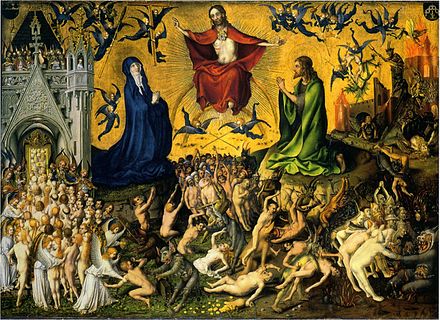
Yet, it is well that God does not forget his creation because, for those that love Jesus, there is also the promise of an unshakeable, enduring covenant:
For I am convinced that neither death nor life, neither angels nor demons, neither the present nor the future, nor any powers, neither height nor depth, nor anything else in all creation, will be able to separate us from the love of God that is in Christ Jesus our Lord. (Romans 8:38-39)
 God Breathed Words