THOUGHT(S)

Destroy arguments and every lofty opinion raised against the knowledge of God, and take every thought captive to obey Christ… 

(2 Corinthians 10:5) 

The word translated ‘thought’ is νόημα (noéma) derived from the verb noiéō which is from noús mind, so we get the product of the mind, thought, and the activity ‘thinking’; however, the suffix -ma is suggestive of the final product, and a fuller translation is therefore ‘purpose’ or ‘design’.  [Indeed, Oswald Chambers in his devotional reading for 9th September in ‘My Utmost for His Highest’ takes noéma to be ‘project’.]

Read more

MACEDONIA

And a vision appeared to Paul in the night: a man of Macedonia was standing there, urging him and saying, ‘come over to Macedonia and help us.’  (Acts 16:9)

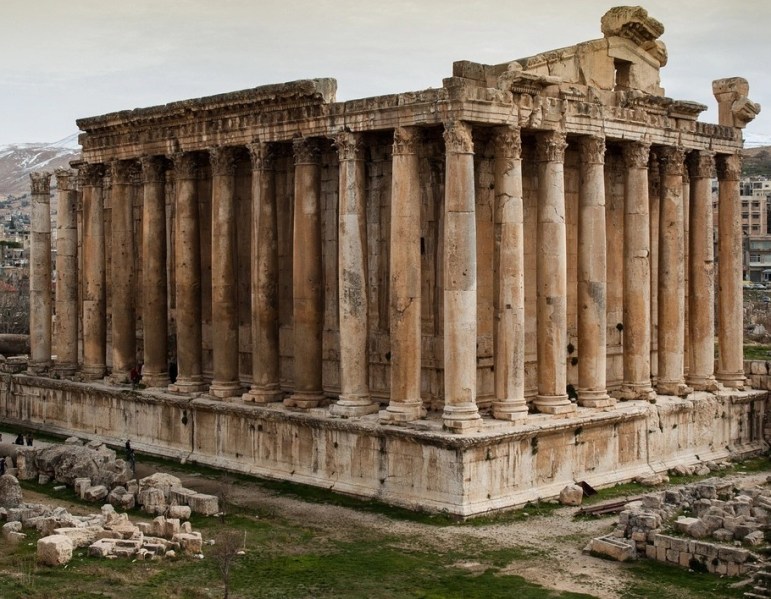
On his return to Galatia, the apostle Paul had planned on expanding his mission to the Roman province of Asia; but receiving an unspecified negative sign sent by the Holy Spirit that barred him from travelling west, he decided to head north to Bithynia and Black Sea coast, only to be prevented again.  Then he was sent a positive sign in the form of a vision, so informing where he was to go.  However, there is good cause to speculate that this was a test for the apostle because, historically, the Macedonians had visited great harm on his people, the Jews and had left a legacy that challenged those who feared God and observed His Holy Law. 

Μακεδονία, Macedonia, was the northern Roman province to the north of Achaia, or Greece. Though to Paul and all Jews, Greeks were interchangeable, Macedonia was not Greece.

Read more

(The circumcision of) TIMOTHY

Paul wanted Timothy to accompany him, and he took him and circumcised him because of the Jews who were in those places, for they all knew that his father was a Greek.  (Acts 16:1-2)

Timothy’s Greek father gave his son a suitably Greek name, Τιμόθεος.  Timotheos ‘honoured by God’, derived from timé, ‘accorded honour’ or ‘perceived value’ and theos, a ‘god’.  It is not clear whether in naming his son, the god Timothy’s father had in mind was a god of the pagan pantheon or the God of Abraham; but it is likely to be the latter, because Paul tells us his mother was Jewish, which meant Timothy was Jewish (as by Hebrew tradition, racial attribution is from the mother not the father.)

Read more

WICKED

There is a vanity that takes place on earth, that there are righteous people to whom it happens according to the deeds of the wicked, and there are wicked people to whom it happens according to the deeds of the righteous. I said that this also is vanity.  (Ecclesiastes 8:14)

Kohelet, the unnamed author of Ecclesiastes, conducts a thought experiment.  If this was indeed Solomon, then he pours all his God-gifted wisdom into considering what mortal life is like without God.  One of his themes is the unfairness that the wicked gain and the righteous lose – and he is not wrong, but only if the death is the end and a just God does not exist.

The word that translated ‘wicked’ is the Hebrew adjective רָשְׁע rasha and it means ‘guilty’, ‘criminal’ or ‘evil’.

Read more

(Commit) SIN

Whoever commits sin also commits lawlessness, and sin is lawlessness.  

(1 John 3:4)

Modern English receives the word ‘sin’ from the Anglo Saxon synne, which has much in common with the Greek word John uses, ἁμαρτία hamartia, as both convey the sense of a misstep and came to mean a ‘violation of law’ – in the somewhat archaic usage, ‘trespass’ or ‘transgression’.  Sin is an act both of omission and commission, yet in both instances, for sin to be sin, it has to be ‘committed’; even failing do what should be done is a deliberate act; and a sin is no less committed even it is thoughtless, reckless or impetuous as opposed to that which is premeditated or calculated.  Jesus of course, extends this act to include intent, not simply the execution:

‘But I say to you that everyone who looks at a woman with lustful intent has already committed adultery with her in his heart…’ (Matthew 5:28)

Read more

(The Naming of) Cain and Abel

Now Adam knew Eve his wife, and she conceived and bore Cain, and said, ‘I have acquired a man from the Lord.’ Then she bore again, this time his brother Abel.  (Genesis 4:1-2a)

The first humans to ever be born were given names with meaning.  Eve explains why her first-born, Cain, is so named.  From the Hebrew verb קָנָה qanah means ‘to get or acquire’, Eve would draw attention and remind Cain that he was an act of God, from which she benefitted and by which he was ‘gotten’.  

Read more

WORSHIPPING (GOD)

‘O King of the nations!

    Who will not fear, O Lord,
    and glorify your name?
For you alone are holy.
    All nations will come
    and worship you,
for your righteous acts have been revealed.’ 

(Revelation 15:4)

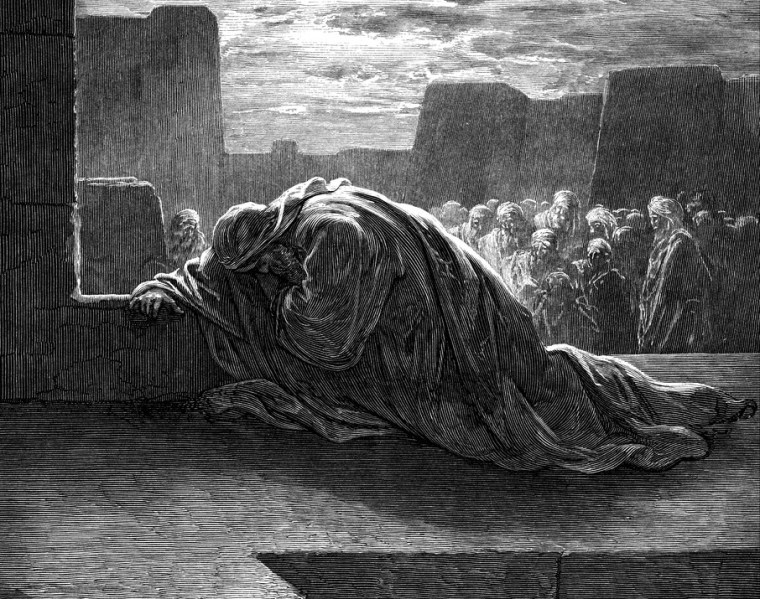
This is the heavenly song of the faithful ‘overcomers.’  They declare the Biblical truth that everyone will worship God in the eternal, even those that rejected and denied His existence.  So, are all the worshippers of one mind?  Are all willing?

The word translated here as ‘worship’ is the Greek verb προσκυνέω proskuneó from pros ‘towards’ and kyneo ‘kiss’.  This describes obeisance, the action of kneeling before or even lying at the feet of another to kiss the ground, not daring to kiss the object of supreme reverence.  

Read more

(God’s perfect) JUSTICE

For the Lord is a God of justice;
    blessed are all those who wait for him.
  (Isaiah 30:18b)

The Hebrew word translated ‘justice’ is מִשְׁפָט mishpat, and covers a range of meaning, that includes all things related to judgment, regulation and condemnation.  It upholds that justice is served when transgression is punished.  

Made in God’s image, humankind seeks perfect justice and finds the world lacking it.  Scripture affirms this, asserting that, seen through a temporal lens, justice can only be found at two events, the cross and the final judgment.  Thus, it is important to wait for justice to be done.

Read more

ANCHOR

We have this as a sure and steadfast anchor of the soul, a hope that enters into the inner place behind the curtain, where Jesus has gone as a forerunner on our behalf, having become a high priest for ever after the order of Melchizedek.  (Hebrews 6:19-20)

Anchor is the transliteration of the Latin ancora, itself from the Greek ἄγκυρα agkura.  While the word is familiar enough, the usage in Hebrews is less obvious.

Read more

WEAKNESS

In order to keep me from becoming conceited, I was given a thorn in my flesh, a messenger of Satan, to torment me. Three times I pleaded with the Lord to take it away from me. But he said to me, ‘My grace is sufficient for you, for my power is made perfect in weakness.’  

(2 Corinthians 12:7-9) 

What Jesus tells Paul appears contradictory, and indeed it is baffling.  Yet scripture is not given by God to obscure, rather it is revelatory.

How can ‘any power be made perfect in weakness?’  This is not in self-handbooks, let alone the leadership playbook beloved of chief executives, politicians; those with presidential aspiration or any the would-be despots seek power and hold through strength and domination.

Read more