Who, or what, is a Gentile and, Biblically, what is the significance of this status after Christ? In this examination, I look at the word which was used to represent all those who were ‘not of Israel’.
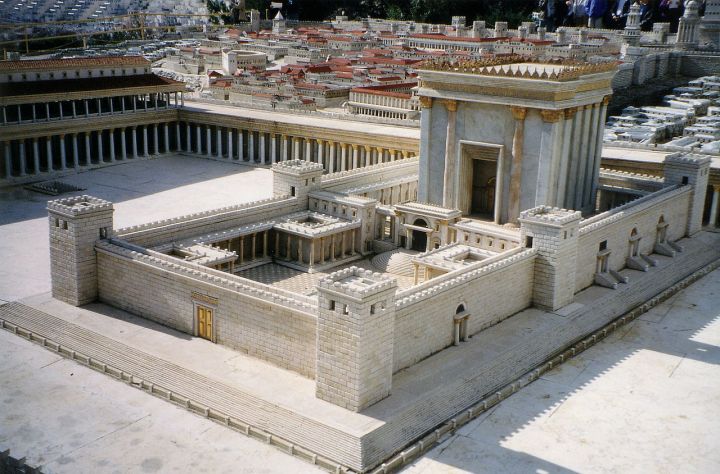
Who, or what, is a Gentile and, Biblically, what is the significance of this status after Christ? In this examination, I look at the word which was used to represent all those who were ‘not of Israel’.
…the Son of Man is Lord even of the Sabbath.’ (Mark 2:28)
The Greek word κύριος kyrios (Strongs 2962) -and its various declensions -appears 722 times in the New Testament, most often in reference to Jesus; it means lord or master, or properly ‘a person possessing absolute rights of ownership’. Read more
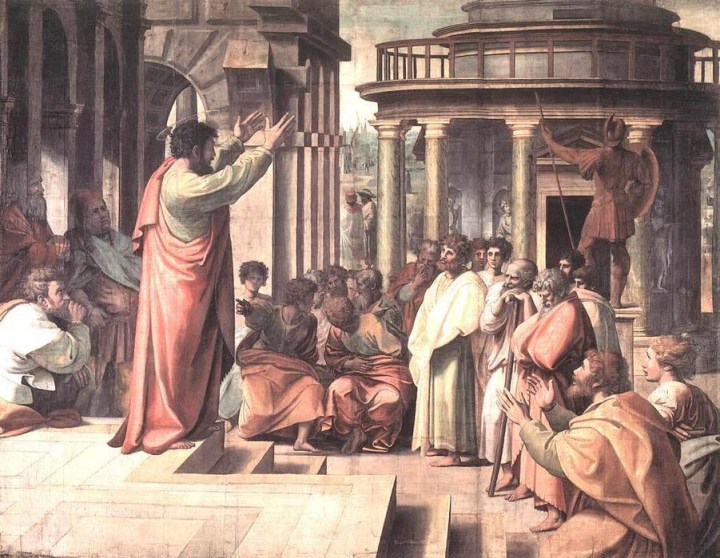
Surely you remember, brothers and sisters, our toil and hardship; we worked night and day in order not to be a burden to anyone while we preached the gospel of God to you. (1 Thessalonians 2:9)
The Greek word that is most often translated as ‘preach’ is κηρύσσω – kérussó (Strong’s 2784). The word in the Koine Read more
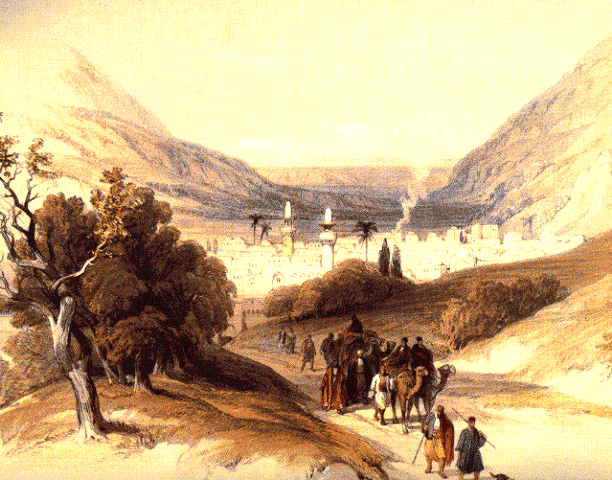
Abram travelled through the land as far as the site of the great tree of Moreh at Shechem. At that time, the Canaanites were in the land. The Lord appeared to Abram and said, ‘To your offspring, I will give this land.’ So, he built an altar there to the Lord, who had appeared to him. (Genesis 12:6-7)
This is the first mention of Shechem. שְׁכָם Shekem (Strong’s Hebrew 7927) means ‘ridge’ or ‘shoulder’ Read more

‘Do not think that I have come to abolish the Law or the Prophets; I have not come to abolish them but to fulfil them…’ Matthew 5:17
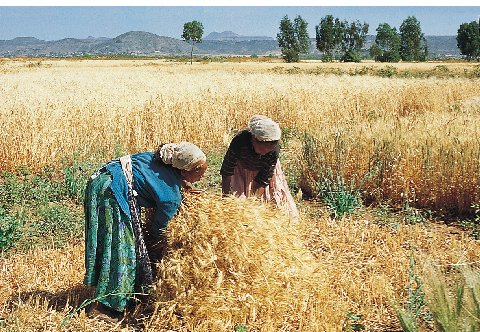
For those of you following my blog, I began with a look at the Jewish Feasts (Leviticus 23). You many have noted that the seven feasts are set in a pattern, three together (Passover, Leavened Bread and Firstfruits), one by itself (Pentecost) and, again, a cluster of three (Trumpets, Day of Atonement and Booths); this timing aligns with the three periods of harvest in Israel. (With God, there are no coincidences!) So, in this post we consider the word ‘harvest’ in a Biblical context. Read more
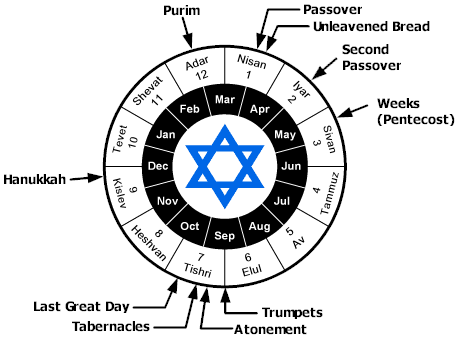
To further understand Jesus, the modern Christian necessarily must know how the Mosaic Law governed his life as a Jewish man. On the sermon on the mount, Jesus said: ‘Do not think that I have come to abolish the Law or the Prophets; I have not come to abolish them but to fulfil them’ (Matthew 5:17). Among the many requirements to be observed were the three annual pilgrimages. In this post, I will outline the Seven Feasts that punctuate the Jewish year, then and now. In a subsequent post I will examine how Jesus fulfilled them.

In Bible study, much time is given to understanding the words themselves. Take one, ‘righteousness’. For years I had no idea what this meant. As a choirboy in my village church, it seemed an exotic, foreign word. But when I came to know Jesus, the word came alive for me. I looked at it anew and discovered that it was not ‘foreign’ in any way but very much English, Old English in fact, rihtwísnes, literally right-wise-ness, so a righteous person is one ‘right-thinking’.
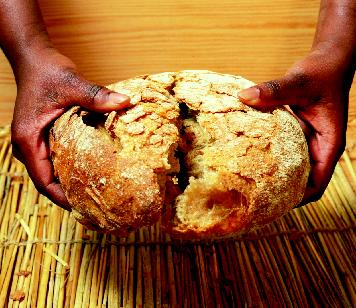
Modern English derives 75% of it words from the Anglo Saxon, and two in particular, initially grabbed my attention. ‘Blessing’ comes from the verb blotsian, which means to benefit from a blood sacrifice, while ‘lord’ from hlaford, loaf-ward, the one who keeps and gives bread. Two words that had pagan origins, yet in their current usage is revealed their real meaning. In Christ, all benefit from his blood and body sacrificed for us, and we give thanks with wine and bread:
Is not the cup of thanksgiving for which we give thanks a participation in the blood of Christ? And is not the bread that we break a participation in the body of Christ? Because there is one loaf, we, who are many, are one body, for we all share the one loaf. (1 Corinthians 10:16-17)
I have looked at other words some almost exclusively used in a Christian/Spiritual context, for instance, ‘holiness’ and others with a wider usage that have specific Biblical meanings, such as ‘justification’, ‘hope’, or ‘peace’.
Contained within the words we use routinely as Christians is great power and meaning, of course this must be the case, all is God-given and the Word, the Bible, is God-breathed.
That Bible is now read in many languages but this is English and many have dedicated their all to ensure English speakers have a Bible that is available to us in our vernacular. In fact, Wycliffe and Tyndale would be amazed to find that there are 105 in current editions, and that is not including partial Bibles.
The language we use is shared but the versions vary and the words used are sifted. We often return to the original versions of the Old and New Testaments, working out how the Holy Spirit could have been called the Holy Ghost, how in Hebrew Spirit means breath (hence the God-breathed word) but in Greek it could also mean ‘air’. Of course, Ghost, derives from the Old English, geist, which means a non-corporeal presence.
Put all this together helps to understand that God breathed into existence Creation by expressing the Word and we have the Trinity.

God (theFather) – Word (the Son) – Breath (Holy Spirit). And above is an Anglo Saxon symbol that I have used to represent the Trinity.
In the beginning God created the heavens and the earth. Now the earth was formless and empty, darkness was over the surface of the deep, and the Spirit of God was hovering over the waters. And God said, ‘Let there be light,’ and there was light. (Genesis 1:1-3)
In the beginning was the Word, and the Word was with God, and the Word was God. He was with God in the beginning. (John 1:1-2)
This blog is no more than an offering from one who puts his faith in Jesus the Messiah, passing on his study of the Bible, in the hope that it might be of benefit to others.
 God Breathed Words