
THOUGHT(S)

Destroy arguments and every lofty opinion raised against the knowledge of God, and take every thought captive to obey Christ… 

(2 Corinthians 10:5) 

The word translated ‘thought’ is νόημα (noéma) derived from the verb noiéō which is from noús mind, so we get the product of the mind, thought, and the activity ‘thinking’; however, the suffix -ma is suggestive of the final product, and a fuller translation is therefore ‘purpose’ or ‘design’.  [Indeed, Oswald Chambers in his devotional reading for 9th September in ‘My Utmost for His Highest’ takes noéma to be ‘project’.]

Read more
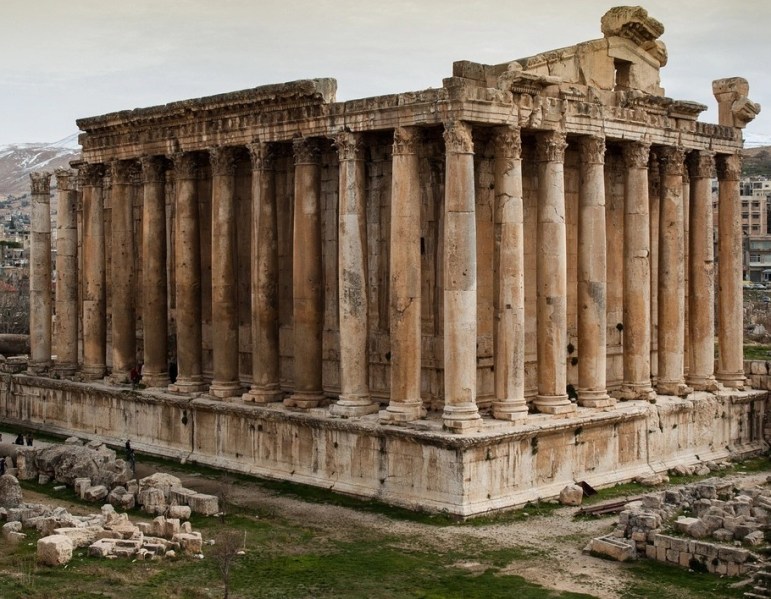

MACEDONIA

And a vision appeared to Paul in the night: a man of Macedonia was standing there, urging him and saying, ‘come over to Macedonia and help us.’  (Acts 16:9)

On his return to Galatia, the apostle Paul had planned on expanding his mission to the Roman province of Asia; but receiving an unspecified negative sign sent by the Holy Spirit that barred him from travelling west, he decided to head north to Bithynia and Black Sea coast, only to be prevented again.  Then he was sent a positive sign in the form of a vision, so informing where he was to go.  However, there is good cause to speculate that this was a test for the apostle because, historically, the Macedonians had visited great harm on his people, the Jews and had left a legacy that challenged those who feared God and observed His Holy Law. 

Μακεδονία, Macedonia, was the northern Roman province to the north of Achaia, or Greece. Though to Paul and all Jews, Greeks were interchangeable, Macedonia was not Greece.

Read more

(The circumcision of) TIMOTHY

Paul wanted Timothy to accompany him, and he took him and circumcised him because of the Jews who were in those places, for they all knew that his father was a Greek.  (Acts 16:1-2)

Timothy’s Greek father gave his son a suitably Greek name, Τιμόθεος.  Timotheos ‘honoured by God’, derived from timé, ‘accorded honour’ or ‘perceived value’ and theos, a ‘god’.  It is not clear whether in naming his son, the god Timothy’s father had in mind was a god of the pagan pantheon or the God of Abraham; but it is likely to be the latter, because Paul tells us his mother was Jewish, which meant Timothy was Jewish (as by Hebrew tradition, racial attribution is from the mother not the father.)

Read more

WICKED

There is a vanity that takes place on earth, that there are righteous people to whom it happens according to the deeds of the wicked, and there are wicked people to whom it happens according to the deeds of the righteous. I said that this also is vanity.  (Ecclesiastes 8:14)

Kohelet, the unnamed author of Ecclesiastes, conducts a thought experiment.  If this was indeed Solomon, then he pours all his God-gifted wisdom into considering what mortal life is like without God.  One of his themes is the unfairness that the wicked gain and the righteous lose – and he is not wrong, but only if the death is the end and a just God does not exist.

The word that translated ‘wicked’ is the Hebrew adjective רָשְׁע rasha and it means ‘guilty’, ‘criminal’ or ‘evil’.

Read more

(God’s perfect) JUSTICE

For the Lord is a God of justice;
    blessed are all those who wait for him.
  (Isaiah 30:18b)

The Hebrew word translated ‘justice’ is מִשְׁפָט mishpat, and covers a range of meaning, that includes all things related to judgment, regulation and condemnation.  It upholds that justice is served when transgression is punished.  

Made in God’s image, humankind seeks perfect justice and finds the world lacking it.  Scripture affirms this, asserting that, seen through a temporal lens, justice can only be found at two events, the cross and the final judgment.  Thus, it is important to wait for justice to be done.

Read more

LYING

When he lies, he speaks out of his own character, for he is a liar and the father of lies.  (John 8:44b)

Jesus is speaking of the devil, who is elsewhere in the Bible shown to be Satan and he is the original deceiver.

The Greek word translated ‘lie’ is the verb ψεύδομαι (pseudomai) and it means ‘to falsify’ or ‘to wilfully misrepresent’.

Read more

RELIGION

Religion that is pure and undefiled before God, the Father, is this: to visit orphans and widows in their affliction, and to keep oneself unstained from the world.  (James 1:27)

The word translated ‘religion’, is θρησκεία (thréskeia) and while the underlying sense is reverence, its usage conveys worship as expressed in ritual acts.  And it is in the context of action that James exhorts his brethren to be ‘doers of the word’, adding, ‘a doer who acts…will be blessed in his doing’.

Read more

SHAME

God chose what is foolish in the world to shame the wise; God chose what is weak in the world to shame the strong; God chose what is low and despised in the world, even things that are not, to bring to nothing things that are,so that no human being might boast in the presence of God.  (1 Corinthians 1:27-29)

Shaming is a process of belittlement and Paul tells us that how God uses it for his good purpose.  The Greek word here is καταισχύνω (kataishuno) meaning to disgrace, confound or dishonour.

But it is equally important to note why God would do such a thing, which stems from the desire to bring all to repentance and through faith to restore hope.

Read more

PARTY (or sect)

But the high priest rose up, and all who were with him (that is, the party of the Sadducees), and filled with jealousy, they arrested the apostles and put them in the public prison.  (Acts 5:17-18)

The word ‘party’ translates the Greek noun αἵρεσις (hairesis) and stands for people who strongly self-identify with each other (the verb hairéomai means ‘to personally select’), in other words to cohere as a sect or a religious or philosophical group.

The Romano-Jewish historian, Flavius Josephus, writing in the second half of the first century AD, identified four distinct groupings of Jews.  For ‘party’, it is best not to consider them in modern terms like political parties, or even organisations (with rules and membership) rather imagine a cross between a faction and a coterie or socio-religious affiliations, although ‘sect’ can certainly be applied in one instance.

Read more

HATE (mortality)

 ‘Whoever loves his life loses it, and whoever hates his life in this world will keep it for eternal life.’  (John 12:25).  

The word ‘hate’ translates the verb μισέω miseó and it embraces both the unconditional: ‘detest’ and comparative: ‘love less than’.

Read more