REJECTION

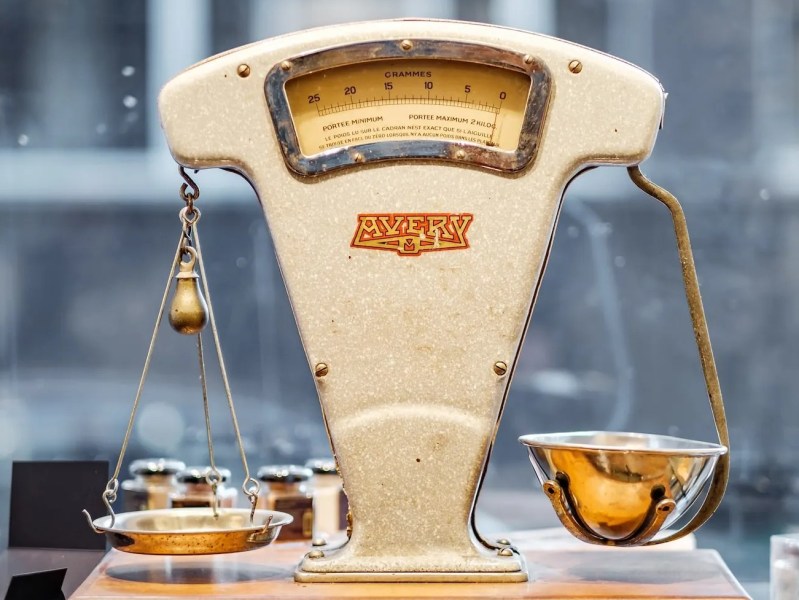
For you know that afterwards, when he desired to inherit the blessing, (Esau) was rejected, for he found no chance to repent, though he sought it with tears.  

(Hebrews 12:17)

To the author of Hebrews, Esau is cautionary example.  This book of the New Testament is a warning to Jews of the early Church to not turn their back on their faith that Jesus is their Messiah, the fulfilment of the Law and the Prophets, their Scripture.

Exhorting them to endure, he says this:

See to it that no one fails to obtain the grace of God; that no “root of bitterness” springs up and causes trouble, and by it many become defiled;that no one is sexually immoral or unholy like Esau, who sold his birthright for a single meal.  (ibid 12:15-16)

Esau came to regret his rash exchange of birthright and acts as a reminder to Jews contemplating apostasy, remember he could not reverse this decision – in this, he was ‘rejected’.  The word translated is ἀποδοκιμάζω(apodokimazó) and it means to disallow; therefore, it is important to confuse the denial of Esau’s request with ultimate rejection by God.  

Read more

ARMOUR (of God)

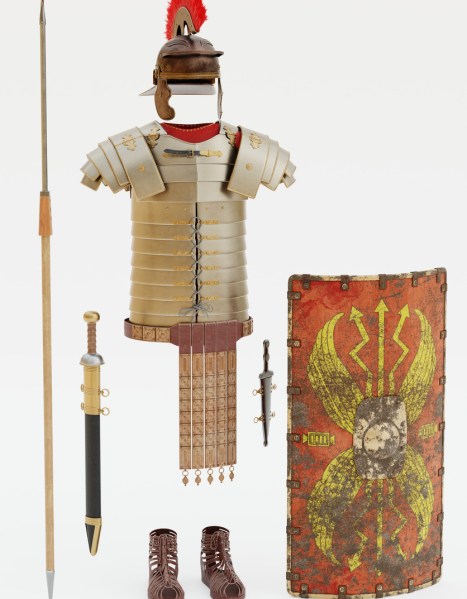
Put on the whole armour of God, that you may be able to stand against the schemes of the devil. (Ephesians 6:11)

The ‘whole armour’ is the full set of equipment needed to wage warfare, and translates πανοπλία panoplia, whence English derives ‘panoply’.  Doubtless, he had in mind the Roman soldier fully furnished with helmet, breastplate, sandals and short sword.  To the Ephesians, Paul has already used the analogy of believers clothing themselves, ‘putting on’ (the verb ἐνδύω enduo, to be clothed or enveloped) the new self, the spiritual part downpayment of the new creation; but Paul would also have it known that this new spirit can come under attack.  

Read more

ARK

 Make yourself an ark of gopher wood.  Make rooms in the ark, and cover it inside and out with pitch. (Genesis 6:14)

Jesus says that 

The word translated ark is תֵּבָה tebah and it means a box or chest, which is why it came to English translations in this fashion; ‘ark’ derives from the Anglo Saxon ærc for casket – as clearly, God only tasks Noah to build a sea-worthy vessel, not a boat or ship.

Read more

(Christ’s eternal) ANGUISH

Out of the anguish of his soul he shall see and be satisfied; by his knowledge shall the righteous one, my servant, make many to be accounted righteous, and he shall bear their iniquities. (Isaiah 53:11) *

Jesus’ agony on the cross was for all to see, the spectacle of suffering was the deterrent the Romans intended; but Isaiah says Jesus endures spiritual torment.  Can it be that Jesus suffers even as he is glorified?  

The word translated ‘anguish’ is עָמָל amal which means trouble, labour or misery.  It intimates a sustained burden from which there is no escape.

Read more

CONVICTION

Now faith is the assurance of things hoped for, the conviction of things not seen.  (Hebrews 11:1)

A conviction is a firmly and strongly held belief and in the ESV Bible translation it stands for the Greek word ἔλεγχος elegchos, which can mean ‘test’ or ‘proof’, but here it means to believe fervently.

A court conviction is the decision based on solid and compelling evidence, and it is the verdict based on the balance of that evidence. 

Read more

ASSURANCE

Now faith is the assurance of things hoped for, the conviction of things not seen.  (Hebrews 11:1)

The Bible provides the most succinct definition of Christian faith and it comes in two parts.  This post will look at the first part and for that it is necessary to understand the word ‘assurance’ (for the second part, please see subsequent post, ‘conviction’).

Faith in Jesus is the condition he himself sets for deliverance from death.  Speaking before the tomb of Lazarus, Jesus says to his sister Martha:

‘I am the resurrection and the life.  Whoever believes in me, though he die, yet shall he live… (John 11:25)

Read more

(Commit) SIN

Whoever commits sin also commits lawlessness, and sin is lawlessness.  

(1 John 3:4)

Modern English receives the word ‘sin’ from the Anglo Saxon synne, which has much in common with the Greek word John uses, ἁμαρτία hamartia, as both convey the sense of a misstep and came to mean a ‘violation of law’ – in the somewhat archaic usage, ‘trespass’ or ‘transgression’.  Sin is an act both of omission and commission, yet in both instances, for sin to be sin, it has to be ‘committed’; even failing do what should be done is a deliberate act; and a sin is no less committed even it is thoughtless, reckless or impetuous as opposed to that which is premeditated or calculated.  Jesus of course, extends this act to include intent, not simply the execution:

‘But I say to you that everyone who looks at a woman with lustful intent has already committed adultery with her in his heart…’ (Matthew 5:28)

Read more

LUKEWARM

‘I know your works: you are neither cold nor hot. Would that you were either cold or hot! So, because you are lukewarm, and neither hot nor cold, I will spit you out of my mouth.’  (Revelation 3:15-16)

The revelation given to John mostly concerns the Last Days, in Greek ἔσχᾰτος eschatos, but not only does that cover the end of history and the world, it also includes present age.  To this end, it begins with Jesus’ assessment of the state of his Church.  While his audit names the major centres of the burgeoning faith in Asia Minor (Anatolian Peninsula), some suggest that each church also represents the complete Church over time; thus the last, Laodicea, conveys the state of today’s Church.  Be that as it may, Jesus’ rebuke of tepidity is stark and not a little startling.  

Read more

UNWORTHY

When you have done all that you were commanded, say, ‘We are unworthy servants; we have only done what was our duty.’  (Luke 17:10 ESV)

In the latest post, the same passage based on a translation where ἀχρεῖος, achreios, the word above ‘unworthy’, was better rendered as ‘unprofitable’.  Is ‘unworthy’ poor translation? Hardly, for it correctly conveys the sense that someone or something is ‘lacks utility’, the very literal meaning of achreios, and it is short step from ‘useless’ to ‘being without merit’ – but it may possibly mislead if taken in isolation from all the Jesus taught, and indeed, all Scripture.

Read more

ETERNITY

God has put eternity into man’s heart, yet so that he cannot find out what God has done from the beginning to the end.  (Ecclesiastes 3:11b)

The Bible affirms that human beings are eternal creatures.  Mortality was simply a mechanism of grace, for without mortal life the first infraction would doom to hell.  Solomon, granted all earthly wisdom, says self-knowledge of eternity is hard-wired into our very nature.

Read more