COMMAND

‘All authority in heaven and on earth has been given to me. Therefore, go and make disciples of all nations, baptising them in the name of the Father and of the Son and of the Holy Spirit, and teaching them to obey everything I have commanded you. And surely, I am with you always, to the very end of the age.’ (Matthew 28:18-20)

This known as the Great Commission, is Jesus’ final instructions before he ascends heavenwards.  Here ‘command’ translates the Greek verb, ἐντέλλομαι entellomai, to charge or enjoin, to issue injunctions or instructions.  The aorist tense, conveying a single and discreet action, is in the first-person singular, ἐνετειλάμην eneteilamen.

In the companion post to ‘Obedience’, it is seen that Jesus expects discipleship to be based on obedience to his commands.  On other words, obeying to his commandments is the foundation of the relationship.  It is non-negotiable.

Read more
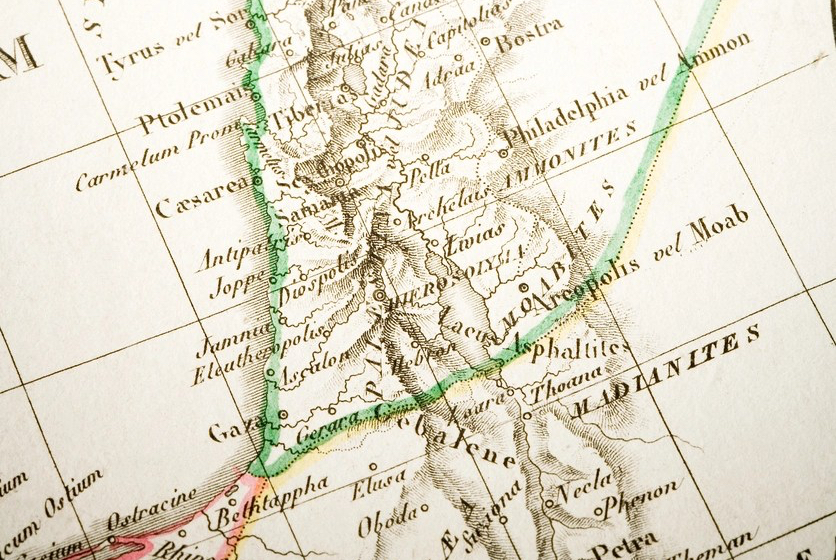
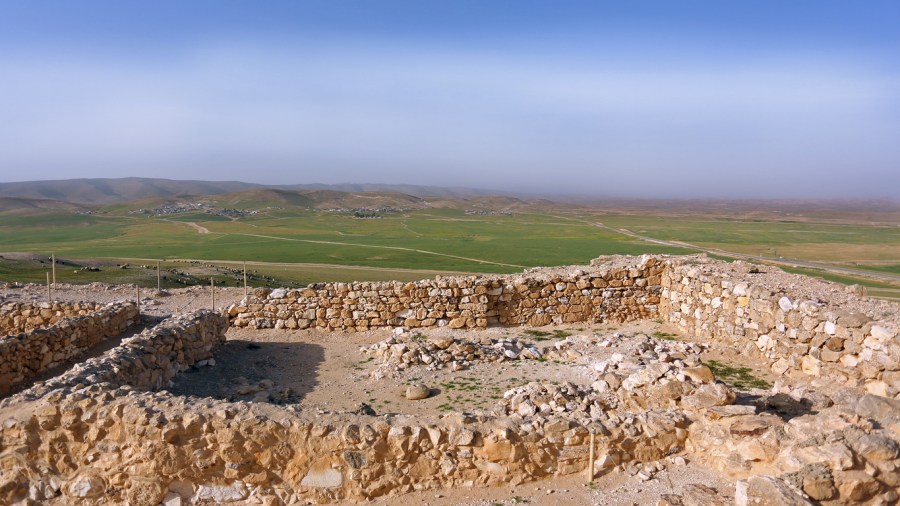
Gaza

Samson did not know that the Lord had departed from him.  Then the Philistines took him and put out his eyes, and brought him down to Gaza.  (Judges 16:20c-21)

Biblically, Gaza is probably best associated with Samson, whom God turned over to his enemies as a result of his inveterate disobedience.

Gaza, עַזָּה or Ghazza, was one of the five city states of Philistia, the ancient kingdom of the Philistines.  And were a thorn in the side of Israel, as seen by God’s reprove of Joshua:

Read more

SABBATH REST

there remains a Sabbath rest for the people of God, for whoever has entered God’s rest has also rested from his works as God did from his… (Hebrews 4:9)

The focus of New Testament book known as ‘Hebrews’ is apostasy; specifically of those Jews who had previously made a profession that Jesus was the Messiah.  Under Roman rule, Jews and their strict observance of the Law of Moses was more than tolerated, it was facilitated.  There was no greater example of this than special dispensation to have day of rest – the concept of having a day off each week being anathema to the commercially minded Roman.

‘Rest’ translates the noun κατάπαυσις katapausis, derived from the verb katapauó, the combination of the preposition kata ‘down from’ and pauó ‘to make to cease’ or ‘hinder’.  Classically, katapausis could mean a lull, or the state of being becalmed, but in New Testament Greek it stands for repose and was used to represent the ‘inactivity’ of the Sabbath.

Read more

ANCHOR

We have this as a sure and steadfast anchor of the soul, a hope that enters into the inner place behind the curtain, where Jesus has gone as a forerunner on our behalf, having become a high priest for ever after the order of Melchizedek.  (Hebrews 6:19-20)

Anchor is the transliteration of the Latin ancora, itself from the Greek ἄγκυρα agkura.  While the word is familiar enough, the usage in Hebrews is less obvious.

Read more

WEAKNESS

In order to keep me from becoming conceited, I was given a thorn in my flesh, a messenger of Satan, to torment me. Three times I pleaded with the Lord to take it away from me. But he said to me, ‘My grace is sufficient for you, for my power is made perfect in weakness.’  

(2 Corinthians 12:7-9) 

What Jesus tells Paul appears contradictory, and indeed it is baffling.  Yet scripture is not given by God to obscure, rather it is revelatory.

How can ‘any power be made perfect in weakness?’  This is not in self-handbooks, let alone the leadership playbook beloved of chief executives, politicians; those with presidential aspiration or any the would-be despots seek power and hold through strength and domination.

Read more

SUFFICIENCY

And God is able to make all grace abound to you, so that having all sufficiency in all things at all times, you may abound in every good work.  (2 Corinthians 9:8)

Paul is exhorting the faithful Achaians to respond as the Macedonians and give generously to brethren in Jerusalem.   He illustrates this by quoting from the psalter:

He has distributed freely, he has given to the poor;
    his righteousness endures for ever.
  (Psalms 112:9)

Thus, the apostle asserts the concept of God’s sufficiency is an essential Biblical truth, not just for the doubting Corinthian.

Read more

Subject (to governing authorities)

Let every person be subject to the governing authorities. For there is no authority except from God, and those that exist have been instituted by God.  Therefore, whoever resists the authorities resists what God has appointed, and those who resist will incur judgement.  (Romans 13:1-2)

The word translated ‘subject’ is ὑποτάσσω hypotassó from hypo, ‘under’ and tasso ‘arrange; thus, under (God’s) arrangements.  Paul is unequivocally saying that God institutes earthly governance and all governments must be respected by God’s people.  Within ten years after this letter to the Roman church was written, the Emperor Nero unjustly blamed Christians for having starting a fire that devastated some two thirds of Rome.  One of the emperor’s capricious punishments was to position Christians on poles and set them alight, as so called ‘Nero’s torches’.  

Read more

Knowledge (of Salvation)

I write these things to you who believe in the name of the Son of God that you may know that you have eternal life.  (1 John 5:13)

Can any know that they are saved?  Surely faith and knowledge are mutually incompatible?  For those who believe may still doubt, whereas certainty excludes all doubt.

Read more

COVET

‘And you shall not covet your neighbour’s wife. And you shall not desire your neighbour’s house, his field, or his male servant, or his female servant, his ox, or his donkey, or anything that is your neighbour’s.’ (Deuteronomy 5:21)

The tenth commandment is different to the other nine because dictates the internal life.  It is centred on desire not behaviour, on what drives action not the actions themselves.

Read more