
‘Take heart; I have overcome the world.’ (John 16:33b)
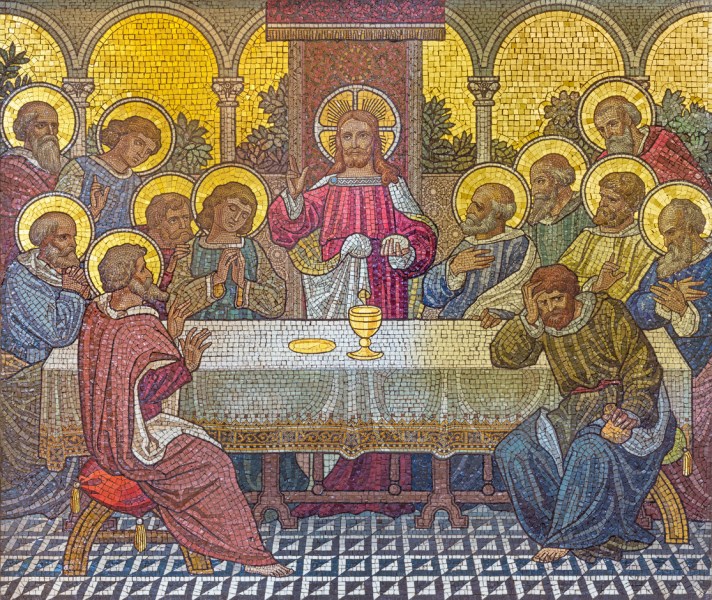
Following the Passover Meal, Jesus prepares his disciples telling them he is about to leave them, but he will send the Paraclete in his place.
I have said these things to you, that in me you may have peace. In the world you will have tribulation… (ibid 16:33a)
He knows they will suffer the loss, not least, initially in their faith that the broken man on the cross was not the Messiah they hoped he was. With the exception of John, performing the family duty of supporting his aunt, Mary, the disciples would scatter and return to Galilee.
But it easy to pass over his summary statement, that he has ‘overcome the world’, noting this is a completed action, in other words, he can surrender to death knowing he is sinless, and that is a victory.
The Greek verb νικάω nikaó means to vanquish, conquer, prevail over and it derives from the Niké, the pagan goddess of victory. So, Jesus saying that he has already won a victory even before passing test of obedience in Gethsemane, and rendering up his life and spirit to his Father.
Read more




 God Breathed Words