ENEMY (of God and other people)

For if while we were enemies we were reconciled to God by the death of his Son, much more, now that we are reconciled, shall we be saved by his life.  

(Romans 5:10)

The Apostle Paul summarises the first four chapters of the epistle to the Romans that demonstrated the adversarial relationship between humanity and God.  The doctrine of justification, the decision of God to restore the relationship on an individual basis unilaterally by faith, necessarily requires God to deal with each person as he finds them and the word Paul uses is echthros (ἐχθρός) meaning ‘enemy’.  From the verb echtho ‘to hate’, Paul is using the strongest term possible to describe the enmity that exists between creator and the blessed creature God made in his own image.  

Read more


DELUSION

God sends (them) a powerful delusion so that they will believe the lie and so that all will be condemned who have not believed the truth but have delighted in wickedness.
(2 Thessalonians 2:11-12)

Greek word translated delusion is plané (πλάνη), in context, this represents a deception or deceit. It derives from the verb planaó, to go astray, to wander, or cause to wander or be misled. In English, this comes to us in the word ‘planet’ as these satellites of the sun are observed to ‘wander’ across the firmament, the ‘firm’ back-cloth of the fixed stars.

So, the sense is deviation, and specifically in the spiritual context, deviation from the truth that there is one God; and of course, the planets are even named after pagan gods, mere inventions from the human mind under powerful delusion.

Read more

WITHHOLD

a man named Ananias, along with his wife Sapphira, sold a piece of property. With his wife’s knowledge, he withheld some of the proceeds from the sale. (Acts 5:1-2a; Common English Bible)

The Greek verb translated in many translations as ‘keep back’ but in the above more simply ‘withhold’ is νοσφίζω nosphizó ‘to sequestrate for oneself’.  The more common usage of this Greek word ‘to embezzle, pilfer or purloin’ is more problematic in the context of this singular incident that beset the foundational Church with fear when first Ananias and then his wife, were struck dead by God as the result of this act.  After all, as the head quotation shows this was Ananias and Sapphira’s asset to theirs to dispose of as they pleased; they stole from no one.  

Read more

SALVATION (security of)

salvation

For the grace of God has appeared that offers salvation to all people. (Titus 2:11)

 The word in Greek that is translated as ‘salvation’ is σωτηρία sótéria (Strong’s 4991).  In Titus, Paul uses the adjectival form, and the sense is of deliverance; this begs the preposition, ‘from’.  From what is anyone delivered or saved?  God offers through Christ, His grace personified, to save individuals from a terrible judgment and ultimate expulsion from His communion.

Read more

DEATH

Barker, Thomas, 1769-1847; The Bride of Death

While warrior cultures like that of the Vikings sought a heroic death, today death is feared or ignored.  Western medicine is given over to the pursuit of protracting life, even at the expense of its quality.  For humankind, however, death was not and is not God’s intention but is the result of men and women’s rebellion.

Read more

WRATH (of God)

The last post concerned why any Christian should be God-fearing…this then is why, because through revelation, s/he realises the danger of being an ‘object of wrath’.

the_great_day_of_his_wrath-john_martin-1851-1853

Whoever believes in the Son has eternal life, but whoever rejects the Son will not see life, for God’s wrath remains on them.  (John 3:36)

Read more

FEAR (of the Lord)

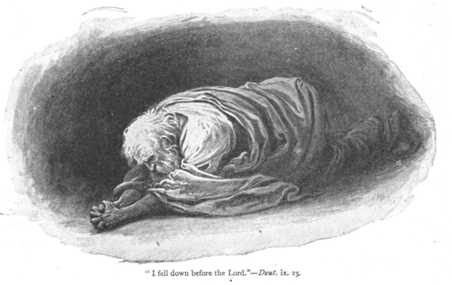
deut9

The fear of the Lord is the beginning of wisdom… (Proverbs 9:10)

Often in the modern church, ‘fear’ is said to be ‘respect’, ‘awe’ or ‘reverence’.  Indeed, fear is thought to be incompatible with love.  How could any fear a god which, through grace, offers salvation and eternal life?  How could anyone keep the first commandment to love God, and yet fear Him at the same time?  The answer lies in the rest of the verse from Proverbs:

….and knowledge of the Holy One is understanding.
Read more