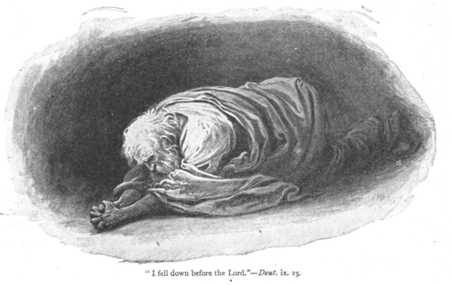
The fear of the Lord is the beginning of wisdom… (Proverbs 9:10)
Often in the modern church, ‘fear’ is said to be ‘respect’, ‘awe’ or ‘reverence’. Indeed, fear is thought to be incompatible with love. How could any fear a god which, through grace, offers salvation and eternal life? How could anyone keep the first commandment to love God, and yet fear Him at the same time? The answer lies in the rest of the verse from Proverbs:
….and knowledge of the Holy One is understanding.
So, to the words commonly used in the Bible that are translated as ‘fear’; in the passage verse above the word is יִרְאָה yirah (Strong’s 3374) which comes from yare (S3372) and if means ‘to take fright’, ‘to be affeared’.
It is true that the word can also mean extreme reverence, and the NIV, for example, recognises this through context:
If you, Lord, kept a record of sins,
Lord, who could stand?
But with you there is forgiveness,
so that we can, with reverence (yare), serve you. (Psalm 130:3-4)
But note, here the psalmist has declared that God keeps a record of sins against which all will be judged, and he falls on God’s forgiveness so that service can be offered with reverence.
Without the fear of certain judgment there can be no right standing with God, because it is impossible to take sin seriously enough. It is when eyes open to the reality that in God’s righteousness rests life and in sin death, that the need for a saviour and intercessor becomes paramount, as Job realised:
He (God) is not a mere mortal like me that I might answer him,
that we might confront each other in court.
If only there were someone to mediate between us,
someone to bring us together,
someone to remove God’s rod from me
so that his terror would frighten me no more.
Then I would speak up without fear of him,
but as it now stands with me, I cannot. (Job 9:32-34)
In this case, the word that translates ‘fear’ is אֵימִים emah (S367) and it unequivocally ‘terror’ or ‘dread’.
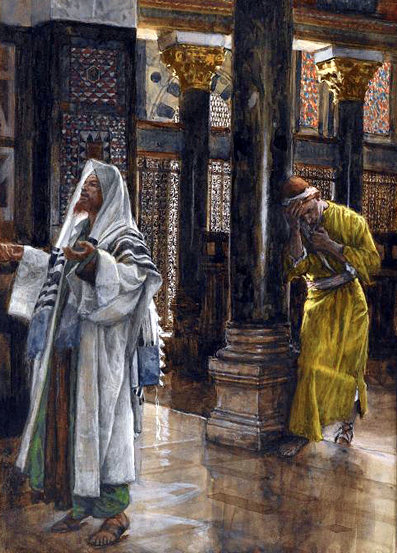
It is also taught that the New Covenant fear is done away with. Yet, there is no contradiction to be found in the New Testament. Paul says:
The Spirit you received does not make you slaves, so that you live in fear again; rather, the Spirit you received brought about your adoption to sonship. And by him we cry, ‘Abba, Father.’ (Romans 8:15)
This much-quoted passage, that speaks of unsurpassable grace and intimate relationship, points to the release from ‘fear’. Here the word is φόβος phobus (S5401) and again it means ‘fear’ not reverence or respect (English uses ‘phobia’ as dread; therefore, arachnophobia is the terror of spiders). What Paul is saying in Romans is that through faith in the death and resurrection of Christ, none need be enslaved to sin and fear judgement.
The writer of Hebrews, using the analogy of the father/son relationship, explains how this works:
In your struggle against sin, you have not yet resisted to the point of shedding your blood. And have you completely forgotten this word of encouragement that addresses you as a father addresses his son? It says,
‘My son, do not make light of the Lord’s discipline,
and do not lose heart when he rebukes you,
because the Lord disciplines the one he loves,
and he chastens everyone he accepts as his son.’
Endure hardship as discipline; God is treating you as his children. For what children are not disciplined by their father? If you are not disciplined – and everyone undergoes discipline – then you are not legitimate, not true sons and daughters at all.
(Hebrews 12:4-8)
It is important that no one takes the grace of God for granted. Paul asks rhetorically:
What shall we say, then? Shall we go on sinning, so that grace may increase? By no means! We are those who have died to sin; how can we live in it any longer? (Romans 6:1-2)
In faith that Jesus is God, being justified, the imputation Christ’s righteousness, does not mean that sin is no longer an issue. Paul is quite clear that there is an ongoing battle with sin because even after justification the sinful nature remains – hence the need for discipline.
I myself in my mind am a slave to God’s law, but in my sinful nature a slave to the law of sin. (Romans 7:25)
It is critical then to grasp that fearing God – that is to be in terror and dread of him – is foundational to being a follower of Christ. Jesus warns:
Do not be afraid (phobeo) of those who kill the body but cannot kill the soul. Rather, be afraid of the One who can destroy both soul and body in hell. (Matthew 10:28)
When Adam sinned, he tried to hide from God:
But the Lord God called to the man, ‘Where are you?’
He answered, ‘I heard you in the garden, and I was afraid (yare) because I was naked; so, I hid.’ (Genesis 3:9-10)
Before the judgement seat of Christ there is no hiding place. Solomon concludes his masterly examination of mortality with this:
Fear (yare) God and keep his commandments,
for this is the duty of all mankind.
For God will bring every deed into judgment,
including every hidden thing,
whether it is good or evil. (Ecclesiastes 12:12-14)
Fear then is the beginning of our relationship with the Creator and only from that starting point can love, praise and gratitude flow. That God chose to redeem his creation from its rebellion is an act of grace – that is, unwarranted mercy; however, without the knowledge and acknowledgement of His righteousness, what is the basis assurance of salvation? Human temptation to sin (self-righteousness) requires that every man and woman strictly adhere to God’s commandments or suffer the eternal consequence. While through faith in Christ, any can hope for salvation; however:
…their work will be shown for what it is, because the Day will bring it to light. It will be revealed with fire, and the fire will test the quality of each person’s work. If what has been built survives, the builder will receive a reward. If it is burned up, the builder will suffer loss but yet will be saved – even though only as one escaping through the flames. (1 Corinthians 3:13-15)
Hence it can be seen that eternal destiny is only in the hands of two persons, God and oneself, and as no one controls God, understanding him and his requirements necessitates fear.
 God Breathed Words