
For the grace of God has appeared that offers salvation to all people. (Titus 2:11)
The word in Greek that is translated as ‘salvation’ is σωτηρία sótéria (Strong’s 4991). In Titus, Paul uses the adjectival form, and the sense is of deliverance; this begs the preposition, ‘from’. From what is anyone delivered or saved? God offers through Christ, His grace personified, to save individuals from a terrible judgment and ultimate expulsion from His communion.
Jesus is uncompromising in telling any that would listen that this future is to be feared. He purposefully gives us appalling images of darkness (eg. Matthew 8:12), endless putrescence or fire, here in graphic terms, quoting Isaiah 66:24
(Where) the worms that eat them do not die, and the fire is not quenched. (Mark 9:48)
Salvation from this terrifying destiny is God’s gift, and solely in his gift:
Truly my soul finds rest in God;
my salvation comes from him. (Psalm 62:1)
And yet, requires each man and woman to step forward.
And everyone who calls on the name of the Lord will be saved
(Acts 2:21, Peter quoting Joel 2:32)
In this can be seen the antinomy (a form of paradox) of sovereignty and human responsibility. God chooses to save, yet only those that declare Christ can be chosen:
if you declare with your mouth, ‘Jesus is Lord,’ and believe in your heart that God raised him from the dead, you will be saved. (Romans 10:9)
Salvation, then, comes from faith (and that of itself is revealed)
For it is by grace you have been saved, through faith – and this is not from yourselves, it is the gift of God – not by works, so that no one can boast. (Ephesians 2:8-9)
Salvation demands an outward sign:
Whoever believes and is baptised will be saved… (Mark 16:16)
And inward alteration:
(The Lord) is patient with you, not wanting anyone to perish, but everyone to come to repentance. (2 Peter 3:9)
Once saved, Jesus says a man or woman is secure:
I give them eternal life, and they shall never perish; no one will snatch them out of my hand. (John 10:28)
And the Holy Spirit, in whom all are reborn, abides:
he who began a good work in you will carry it on to completion until the day of Christ Jesus. (Philippians 1:6)
It is work that cannot be undone, yet some have questioned that salvation can be lost.
The writer of Hebrews wrote to challenge the apostasy of the early church. Many Jewish followers were falling away in the face of persecution. Outwardly, this may not have looked very different, in that many still kept the Law and went to the Temple to offer sacrifice. But, of course, turning one’s back on Jesus as the Christ is serious; hence:
It is impossible for those who have once been enlightened, who have tasted the heavenly gift, who have shared in the Holy Spirit, who have tasted the goodness of the word of God and the powers of the coming age and who have fallen away, to be brought back to repentance. (ibid 6:4-6)
A prevalent misinterpretation of this passage suggests that salvation can be undone. Actually, the passage reads to confirm that this ‘is impossible’. To suggest that any human act could overcome God’s will is clearly to dismiss His sovereignty. So, for instance, sin cannot be a barrier, any more than the attainment of purity (self-righteousness) be a goal:
…while we were still sinners, Christ died for us.
Since we have now been justified by his blood, how much more shall we be saved from God’s wrath through him! For if, while we were God’s enemies, we were reconciled to him through the death of his Son, how much more, having been reconciled, shall we be saved through his life! Not only is this so, but we also boast in God through our Lord Jesus Christ, through whom we have now received reconciliation. (Romans 5:11)
As every person is claimed from sin – and that has to include sinning in every part of life, past, present and future (which is all the same to an eternal God) – there is no way anyone can ‘sin away’ their salvation. Yet, the author of Hebrews also says this:
If we deliberately keep on sinning after we have received the knowledge of the truth, no sacrifice for sins is left, but only a fearful expectation of judgment and of raging fire that will consume the enemies of God.
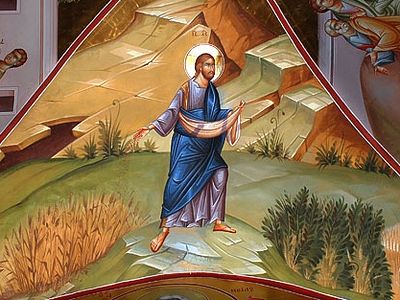
This then is speaking not only to back-sliders, but also to those who have made no genuine profession, at least, as far as God is concerned. Such people are represented by the second fate of the sower’s seed:
The seed falling on rocky ground refers to someone who hears the word and at once receives it with joy. But since they have no root, they last only a short time. When trouble or persecution comes because of the word, they quickly fall away. (Matthew 13:20-21)
But while the subjects of Book of Hebrews are narrowly addressed, the message is universal as is it speaks to warn about outward show of piety allied with the mistaken confidence in salvation. Any can hear the gospel, they even may profess Jesus as the Christ, and yet may not be saved from the fire.
Jesus gives a cautionary parable that the church is populated with both those seeking righteousness and evil-doers:
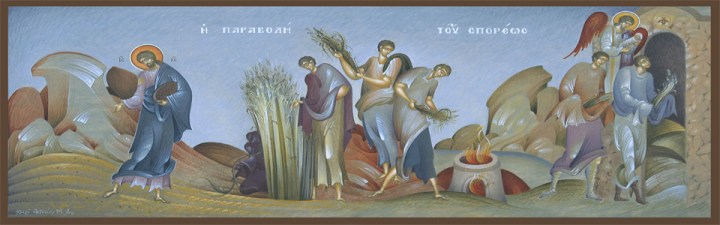
He answered, ‘The one who sowed the good seed is the Son of Man. The field is the world, and the good seed stands for the people of the kingdom. The weeds are the people of the evil one, and the enemy who sows them is the devil. The harvest is the end of the age, and the harvesters are angels. ‘As the weeds are pulled up and burned in the fire, so it will be at the end of the age. The Son of Man will send out his angels, and they will weed out of his kingdom everything that causes sin and all who do evil. They will throw them into the blazing furnace, where there will be weeping and gnashing of teeth. Then the righteous will shine like the sun in the kingdom of their Father. Whoever has ears, let them hear. (Matthew 13:37-43)
One obvious reading of this is that only the angels can sift souls, the church body cannot.
Despite this, for comfort and reassurance, many Christians look for ‘fruit’ as evidence of salvation.
But again, there are difficulties, although it is possible to easily discern the lack of fruit or the rottenness of bad fruit.
(My father) cuts off every branch in me that bears no fruit (John 15:2)
And (regarding false prophets):
By their fruit you will recognise them (Matthew 7:16)
It is less easy to assess its goodness. When Jesus says:
I am the vine; you are the branches. If you remain in me and I in you, you will bear much fruit; apart from me you can do nothing. (John 15:5)
Here is saying that ‘positive’ fruit is nothing more than a by-product of relationship and with that comes an implied warning that chasing the ‘fruit-production’ of good works could lead to downfall, as Jesus teaches in Matthew 7.
‘Not everyone who says to me, “Lord, Lord,” will enter the kingdom of heaven, but only the one who does the will of my Father who is in heaven. Many will say to me on that day, “Lord, Lord, did we not prophesy in your name and in your name, drive out demons and in your name, perform many miracles?” Then I will tell them plainly, “I never knew you. Away from me, you evildoers!” (Matthew 7:21-23)
Now while some of these might well be knowingly insincere, the text speaks of those who have deceived themselves. People that genuinely, and in Jesus’ own name, performed dramatic spiritual acts and are now surprised to find out that they are not to be saved, after all. They thought they were doing God’s will but find out, they were not, it was their own all along.
This is a dreadful warning from Jesus about self-deception, and it should lead anyone to ask, how then can I take comfort in my salvation? And the answer has to be, one cannot. And this is not to doubt God’s promises. While God is faithful and always keep his word, uncertainty serves humankind better than certitude. Hope based on faith will better keep all dependent and humble. It seems He would rather the follower rest in the assurance of salvation or hope – as the writer of Hebrews puts this:
Now faith is confidence in what we hope for and assurance about what we do not see. (Hebrew 11:1)
Fallacious confidence will drive out the very dependence on God that he deems essential to the relationship he desires with his adopted people. Questioning personal salvation also ensures humility. To declare with complete confidence ‘I am saved!’ is not merely to presume to know God, but a presumption to be God.
Insecurity will cause every follower to question themselves, as Paul recommends:
Examine yourselves to see whether you are in the faith; test yourselves. Do you not realise that Christ Jesus is in you – unless, of course, you fail the test? And I trust that you will discover that we have not failed the test. (2 Corinthians 13:5-6)
God knows mankind to value autonomy; pride was the at the root of the first act of rebellion in Eden. Fear is the antidote:
It is a dreadful thing to fall into the hands of the living God. (Hebrews 10:31)
God considers fear to be the best motivator:
The fear of the Lord is the beginning of knowledge,
but fools despise wisdom and instruction. (Proverbs 1:7)
This then gives at least one explanation as to what Paul means:
Therefore, my dear friends, as you have always obeyed… continue to work out your salvation with fear and trembling, for it is God who works in you to will and to act in order to fulfil his good purpose. (Philippians 2:12-13)
Anyone who would seek Him earnestly will be eternally grateful that God never lets him or her know that they are definitively saved. It is better to await judgment with fear than with contentment and with humility than self-righteousness.
For though the Lord is high, he regards the lowly,
but the haughty he knows from afar. (Psalm 138:6 ESV)
 God Breathed Words