The last post concerned why any Christian should be God-fearing…this then is why, because through revelation, s/he realises the danger of being an ‘object of wrath’.
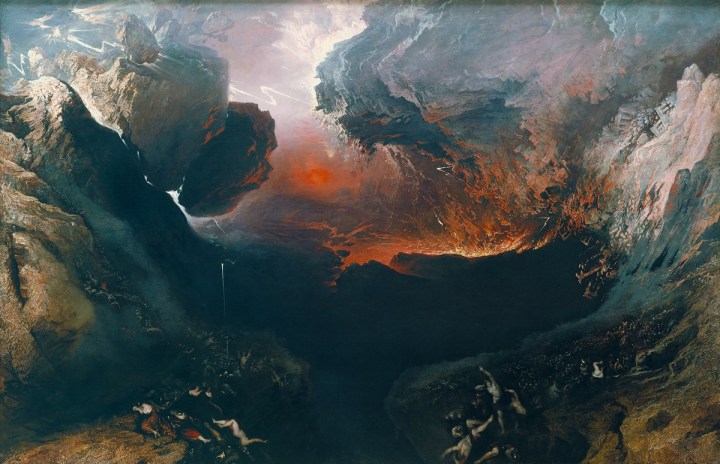
Whoever believes in the Son has eternal life, but whoever rejects the Son will not see life, for God’s wrath remains on them. (John 3:36)
Wrath, or the adjectival ‘wroth’, are words that have largely fallen out of vernacular English, and yet recent versions of the Bible still retain them to describe the attribute of God in respect of opposition to His will.
The Greek word ‘wrath’ translates is ὀργή orge (Strong’s 3709), which conveys the sense of ‘settled anger’. It derives from the verb orago, which means ‘to teem’ or ‘swell’, and therefore suggests not a sudden outburst but a steadily increasing state of righteous indignation. In respect of sin, this then describes God’s controlled fury arising from his immutable nature, in other words, His sanctity.
Wrath comes from the Old English wræþþu and meant simply ‘anger’; its continued use in the Bible, with the characteristic muscularity of the Anglo Saxon that is somehow onomatopoeic, helps to differentiate that which arises from God’s holiness against human temper.
Just as, without God’s spirit, human love is bound in selfishness and cannot be compared to that which flows from a God who is love (1 John 4:8), there is also no comparison between His wrath and the anger of men and women expressed in self-righteous outrage or fits of rage.
Teaching concerning God’s wrath has fallen from fashion, which is sad beyond irony because some of the direst warnings are against false teachers, who will be cursed (Galatians 1:8) that is, subject to wrath, see also:
But there were also false prophets among the people, just as there will be false teachers among you. They will secretly introduce destructive heresies, even denying the sovereign Lord who bought them – bringing swift destruction on themselves.
(2 Peter 2:1)
This is serious because deception leads to ruin:
Let no one deceive you with empty words, for because of such things God’s wrath comes on those who are disobedient. (Ephesians 5:6)
In this verse it is seen that the cause of God’s wrath is the disobedience of humankind. The story of the Israelites, delivered from bondage to the promised land of Canaan, is testament to disobedience. The final chapter of Chronicles records God’s wrath and his temporal judgement:
The Lord, the God of their ancestors, sent word to them through his messengers again and again, because he had pity on his people and on his dwelling-place. But they mocked God’s messengers, despised his words and scoffed at his prophets until the wrath of the Lord was aroused against his people and there was no remedy. He brought up against them the king of the Babylonians, who killed their young men with the sword in the sanctuary, and did not spare young men or young women, the elderly or the infirm. God gave them all into the hands of Nebuchadnezzar. He carried to Babylon all the articles from the temple of God, both large and small, and the treasures of the Lord’s temple and the treasures of the king and his officials. They set fire to God’s temple and broke down the wall of Jerusalem; they burned all the palaces and destroyed everything of value there. (2 Chronicles 36:15-19)
The word in Hebrew that is translated ‘wrath’ is חֵמָה chemah and has a range of meaning from ‘venom’ to ‘fury’ but also ‘burning anger’ or ‘furious heat’.
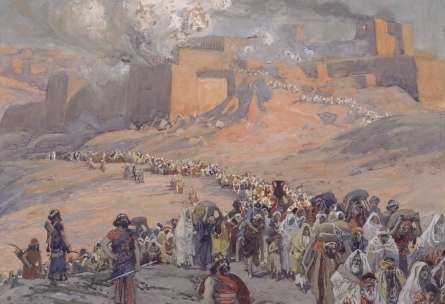
Of course, not all those of Judah were put to the sword and the chapter ends with hope as (seventy years later) God moves the heart of Cyrus to release the remnant to rebuild the temple; however, those now living under the New Covenant are required to note that God will judge and act on that judgement.
Jesus tells all to prepare and expect his second coming and that it will be glorious and terrible; thus, the Holy Spirit is at work:
The wrath of God is being revealed from heaven against all the godlessness and wickedness of people, who suppress the truth by their wickedness, since what may be known about God is plain to them, because God has made it plain to them. (Romans 1:18-19)
Just as for Judah, who were alerted repeatedly by the prophets, everyone is on warning that judgement plus redemption is near:
You ought to live holy and godly lives as you look forward to the day of God and speed its coming. That day will bring about the destruction of the heavens by fire, and the elements will melt in the heat. But in keeping with his promise we are looking forward to a new heaven and a new earth, where righteousness dwells.
(2 Peter 3:11-13)

And this from the Revelation of John:
I saw in heaven another great and marvellous sign: seven angels with the seven last plagues – last, because with them God’s wrath is completed. And I saw what looked like a sea of glass glowing with fire and, standing beside the sea, those who had been victorious over the beast and its image and over the number of its name. They held harps given them by God and sang the song of God’s servant Moses and of the Lamb:
‘Great and marvellous are your deeds,
Lord God Almighty.
Just and true are your ways,
King of the nations.
Who will not fear you, Lord,
and bring glory to your name?
For you alone are holy.
All nations will come
and worship before you,
for your righteous acts have been revealed.’
After this I looked, and I saw in heaven the temple – that is, the tabernacle of the covenant law – and it was opened. Out of the temple came the seven angels with the seven plagues. They were dressed in clean, shining linen and wore golden sashes round their chests. Then one of the four living creatures gave to the seven angels seven golden bowls filled with the wrath of God, who lives for ever and ever. And the temple was filled with smoke from the glory of God and from his power, and no one could enter the temple until the seven plagues of the seven angels were completed.
In Gethsemane, Jesus drank from the cup of wrath, praying:
‘My Father, if it is possible, may this cup be taken from me. Yet not as I will, but as you will….my Father, if it is not possible for this cup to be taken away unless I drink it, may your will be done.’ (Matthew 26:39&42)
By His will, the Father’s wrath was then unleashed on Jesus on the cross, so the debt for human disobedience might be redeemed. John tells us that God sent his only Son into the world for this very reason, that through grace the object of His wrath is substituted:
In this is love, not that we have loved God but that he loved us and sent his Son to be the propitiation for our sins. (1 John 4:10)
God’s wrath is not the caprice of a cruel divinity, it is the justified reaction to evil. God has every right to foreswear his creation who did not return his love, but in his love and mercy, he takes the punishment on himself so that justice is done. Jesus is ‘obedient unto death, even death on a cross’ (Philippians 2:8) to atone for disobedience.
Yet for everyone, now awaiting judgement, there is an urgent need to excise sin – which is that unloving disobedience – and not presume on His love and mercy.
Woe to the world because of the things that cause people to stumble! Such things must come, but woe to the person through whom they come!… if your eye causes you to stumble, gouge it out and throw it away. It is better for you to enter life with one eye than to have two eyes and be thrown into the fire of hell. (Matthew 18:7&9)
Keeping God’s commandments is the only sure way to see life eternal; therefore, it is better to assume you remain an object of God’s wrath – even though this is propitiated by Christ – lest:
…. because of your stubbornness and your unrepentant heart, you are storing up wrath against yourself for the day of God’s wrath, when his righteous judgment will be revealed. God ‘will repay each person according to what they have done’. (Romans 2:5-6)
 God Breathed Words
Nigel,
I recognise there is danger in telling you this – this is Henrichson-esque.
As you have said many times – you write these for yourself. You are being educated (edified) through this gifting and so am I by osmosis. I can’t help but picture either of these last 2 posts being a session at Lost Valley – a place men go to be taught what they won’t hear on a Sunday morning.
Remain humble.
Art
LikeLike